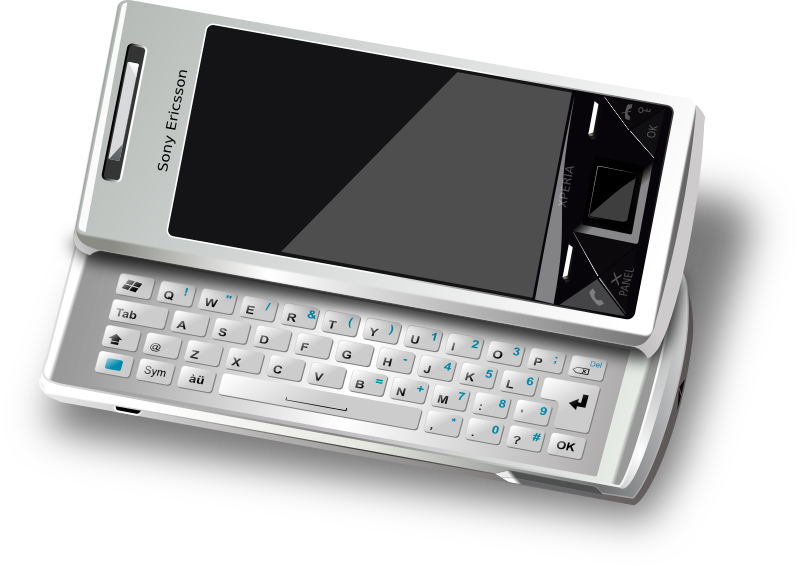
I still know the weight of a phone in the palm while something else is supposed to be happening in the room. The cable runs from instrument to interface, the interface to the laptop, the laptop to a pair of headphones that make the world smaller. A waveform appears before I have decided whether I like what I heard. Each take can be moved, duplicated, trimmed, or replaced; the gesture I meant to keep becomes a region on a timeline I can scroll backward through as if time owed me a refund, and the arrangement offers revision before judgement with every take provisional and every mistake erasable. That is also what it trains: revision as the default posture toward anything that passes through the glass. Music shows the contrast clearly, because music was once a form where error stayed inside the sound and could not be un-sounded without leaving a scar in memory.
Sound that enters a computer becomes numerical data regardless of whether it began as breath, string, tape hiss, or traffic outside the window. That conversion is old news now. What persists is how completely the screen reorganises attention around the data. Meters, grids, file names, versions, plugins, export settings: they sit beside hearing like colleagues at a meeting where only one person was invited to speak. I listen while watching whether the level is correct, whether the transient looks sharp enough, whether another take might rescue the phrase I already played. The performance begins to anticipate inspection. Something in me still wants a room where the note cannot be dragged after the fact, where fatigue and hesitation stay in the body that produced them, where the evening ends and only memory keeps what happened. Such rooms train a different kind of responsibility toward time.
Before the late 2000s, large parts of the audio world could still feel materially analogue even when digital machines were already present in the building. Tape in the archive, a console with physical faders, a transmitter site you could visit as a place. Radio especially carried that double life. You tuned a household receiver and heard a voice arrive as if from weather. Behind the voice, in a city you might never enter, playlists were already files, edits were already non-destructive, advertisements were already scheduled by software, and the programme you experienced as a continuous flow had been assembled from objects that could be copied without wearing out. European broadcasters moved through that transition unevenly. One station might digitise production in the 1980s and keep analogue tape for another decade; another might treat the FM carrier as the last analogue surface long after the studio had become a network of workstations. The listener's ear often registered continuity while the institution had already changed species underneath.
That pattern repeats far beyond radio: a printed book can conceal a digital publishing chain, a staffed counter algorithmic routing, a face on a feed synthetic assembly. The surviving surface creates the impression that the institution has not changed, which is precisely why the surface matters as evidence and as misdirection. Distrust attaches to the moment when everything looks the same as before while the operations behind it have become editable, searchable, rentable, and detachable from the people who once carried them as craft. The curb, the checkout lane, the health portal, and the chat window can all keep that calm surface long after fulfilment became coordinates, ledgers, and queues elsewhere.
Digitisation and digitalisation are often collapsed into one word, as if scanning were the whole story. Scanning is only the first operation. Digitalisation is what happens when institutions rebuild themselves around the assumption that the scan, the sample, the model, or the log entry is the authoritative object and the physical thing is one execution of that description. Matter does not vanish. Farms, mines, cables, warehouses, cooling systems, and exhausted workers remain. What changes is where resistance becomes visible to the person who pressed the button. The user meets language and interface. Other bodies meet heat, weight, schedule, and waste elsewhere.
The long arc toward that arrangement begins with writing still attached to scarce carriers. A manuscript required surface, ink, scribe, storage, transport, custody. Copying meant labour and error inscribed in another object. The codex altered what a reader could do with leaves bound together, yet the text remained material, guarded by institutions that could afford reproduction. Scripture in particular bound fixed language to ritual, law, political authority, and controlled interpretation. When movable metal type made large editions possible in Europe, the transformation was less about removing mediation than about reorganising it around printers, publishers, typesetters, booksellers, censors, warehouses, catalogues, and standardised inventory. The manuscript was copied. The printed book was manufactured as inventory. An edition became more important than any single copy, and language separated from a unique carrier while entering commerce, propaganda, science, pornography, and mass education more deeply than before.
The press at the technical level distinguished type, ink, sequence, labour, permission, and market. It did not distinguish revelation from obscenity on theological grounds. Infrastructure's indifference to meaning becomes a condition that later systems inherit. Once reproduction is industrial, the same apparatus can serve incompatible intentions without needing to understand them. Scripture already treated fixed language as something declared before an authority that would not explain its verdict; later stacks treat prompts, system roles, and repository manifests the same way: language placed before execution, inspectable only at the threshold.
Renting preceded platforms by centuries. Land, tools, animals, rooms, and books could be used without being owned. Circulating libraries in eighteenth-century Britain already resembled streaming in outline: a central catalogue, recurring payment, temporary access, user records, limited permission, provider custody, no requirement that each reader possess each work. The book still travelled, could be damaged, had to be returned. Later systems removed the carrier's movement while preserving central control over the catalogue. The customer felt less of what was being rented because the rented object disappeared into abstraction. Processor time, storage, identity checks, and model inference present themselves as immediate functions of an interface even when they remain rented machinery underneath.
Mail order extended the same grammar. Montgomery Ward's early catalogues and Sears' expanding inventories turned factories, warehouses, credit, railways, and postal networks into a paper interface. The customer performed operations once mediated by a merchant: searching, comparing, selecting, identifying, submitting. The conversation with the seller became catalogue grammar. Distribution without witnesses mattered especially for goods surrounded by shame, legal restriction, or local judgment. Contactless systems save time and also remove observers. Contemporary e-commerce turns the catalogue into a database that watches back: search, recommendation, dynamic price, tracking, behavioural memory. The catalogue no longer waits for the customer. It observes continuously.
Credit and debit did not merely accompany commerce; they reorganised time. Double-entry bookkeeping made every transaction a paired obligation (what leaves one ledger must arrive in another), so a merchant could trust paper across distance long before the buyer appeared with coin. Installment credit turned the sewing machine, the automobile, and the catalogue parcel into futures denominated in monthly slices: the customer possessed the object while the debt remained on someone else's books. Charge cards and revolving credit detached spending from the balance in the pocket; debit cards later made the same terminal deduct what was already there, so one gesture could mean either postponed payment or immediate settlement. Visa and Mastercard built networks that authorised a token at the counter while clearing happened elsewhere: the user experienced solvency as a beep; the institution experienced float, interest, fraud scoring, and compliance across millions of ledgers. Consumer credit made self-service retail, mail order, streaming subscriptions, platform marketplaces, and smartphone wallets possible at scale because the economic transfer no longer required cash synchronised with desire. The debt moved to the future. The interface at the register stayed frictionless. Metering begins here in paired ledgers: every authorisation implies a clearing elsewhere. The same grammar returns as scrobble, token, watt-hour interval, and agent step, with consumption made legible to the provider while the gesture stays instantaneous for the user.
Self-service retail made the economic transfer explicit. In early twentieth-century groceries such as Piggly Wiggly, the shopper walked aisles, read prices, carried baskets, and approached checkout while tasks formerly done by clerks moved onto the customer. The clerk's work did not disappear. Part of it was transferred to the customer. Independence at the counter coincided with cost reduction for the institution because searching, carrying, comparing, data entry, and error detection became unpaid labour encoded into layout and interface. Petrol stations, laundromats, ticket machines, tax portals, cloud dashboards, and generative tools extend the pattern. Automation performs operations inside the system; self-service assigns operations to the user; contemporary digital life combines both.
Recorded sound broke co-presence before broadcasting broke ownership. Scott's phonautograph traced sound visibly in the 1850s without playing it back. Edison's phonograph made recording and playback practical. A performance no longer required performer and listener to share one moment. The voice became detachable from the speaker, carrying timing, breath, accent, and room tone as a repeatable presence-form without actual presence. Radio added another layer: the listener need not own the carrier. Sound arrived on a schedule controlled elsewhere. The listener entered a temporal distribution system. Economically, radio anticipated streaming long before the file format existed.
When sound becomes a file, it separates from device and occasion. It can be copied, indexed, inserted into automated schedules, edited without destroying a physical master, and reproduced in many places at once. Broadcasters adopted hard-disk automation, digital archives, and network transport while FM transmitters sometimes remained the last analogue surface. An FM station could be analogue only at the final stage while recordings, advertisements, routing, compression, and internal transport were already digital. The interior becomes digital before the public surface does. Genre labels weaken after that convergence. Rock, folk, jazz, and electronic music differ culturally and acoustically until they enter the same substrate, where both wooden instruments and voltage-controlled oscillators become samples governed by the same operations. Digitality is a mode of existence and control. A recording can be dirty, unstable, or saturated while remaining data that can be stored, versioned, inspected, and altered.
The music industry made that separation earlier and more visibly than broadcasting did. A record label is not a factory of songs; it is custody over masters, manufacturing, distribution, and the right to rent the catalogue back to listeners who never touch the lacquer. Symphony orchestras sit at the opposite pole of cost (hall, union contracts, scores, conductors, and national programmes): Sibelius's Finlandia is not a file you personalise; it is a civic expense that must be voted for every season, the same national frame in which Finnish-language marketplaces would later route contraband through Posti while customs seized each generation of checkout. The Soviet bard with a guitar in an apartment and the Jamaican sound-system operator running rocksteady into reggae and dub inverted that scale without escaping it, with fewer bodies, cheaper rooms, and remix as production when King Tubby dropped the vocal and kept the bass. Jazz theory (scales, modes, harmony) supplied the grammar improvisation could obey or refuse; free jazz did not begin with Coltrane's Ascension or Albert Ayler's Spiritual Unity, though both stretched the form, and Duke Ellington's big-band institution belongs to the high-cost orchestra lineage, not to the street laboratory Ornette Coleman and Cecil Taylor opened when Coleman's 1960 album Free Jazz gave the movement its name. Punk and hardcore punk sold refusal as three chords and a basement; major-label signings became the sell-out plot the DIY zine network was invented to narrate. Noise music removed melody altogether. When MIDI in 1983 made machines readable as scores, sampling turned every prior recording into raw material: the MPC pad grid and Ableton's loop culture completed what dub had already argued. The socially operative trace need not be a new performance. Digital-only releases and generative services such as Suno extend the grammar, letting the user rent inference, local weights, or a standalone synthesizer, while the evening's sound may never have passed through a room that could be photographed.
Digital signal processing moved filtering, compression, pitch correction, reverberation, and synthesis from dedicated hardware into algorithms living in workstations, phones, cars, and network services. The studio became software. One person could perform tasks previously distributed among performers, engineers, editors, mastering rooms, duplication plants, and distributors. That expansion of capability is routinely called democratisation. It is also labour compression: the user gains power by standing in for an entire chain.
The screen intensifies the shift because it makes process governable as image. Timing becomes a coordinate, dynamics a curve, performance editable material. Direct playing occurs in irreversible time; computer-based production converts events into options. Several takes can be assembled into an evening that never happened. The screen encourages inspection before listening. The finished recording does not document what happened; it documents what survived inspection. Rationalisation here means decomposition into measurable variables. Endless revision is presented as freedom while operationally it suspends decision. Playing music, producing a recording, and manufacturing attention around musical identity are different activities. Recording videos, maintaining accounts, studying metrics, optimising formats, and publishing proof of continuity are media labour. They may use music. Platforms do not require the event; they require legible output associated with the event. Music becomes subordinate to proof that music is being made. The camera alters the performance before recording begins because the performer anticipates framing, duration, shareability, and future circulation. Attention drifts from sound toward the evidence of sound.
There remains a case for music made through irrational discipline: intuition without preliminary measurement, presence without optimisation, action without continuous external evaluation. Theory helps tuning and repair. It becomes destructive when it governs expression while expression is occurring. When the working day already runs through files and administrative surfaces, producing music on the same machine extends that posture into the evening: the timeline offers to undo what playing could not. Computers can be intimate without requiring every activity to share one screen. At least one domain can still refuse to become another file.
Programming was the earliest strong form of computational self-service. A program makes a general machine behave as a particular machine. The same hardware can become calculator, archive, shop, or terminal because software supplies operational arrangement. Tools extend bodily action, industrial machines externalise force, and programmable machines externalise sequence. Software externalises structure, separating a machine's function from fixed physical form. Software is machinery distributed as language. Source code already placed language before execution long before probabilistic models arrived: an inspectable specification the machine would obey without debate. What changed later is the type of language and the type of causality, formal specification versus constraint on a distribution from which an output is selected.
Time-sharing in the early 1960s let many users rent intervals on one expensive computer through terminals, establishing an economic architecture cloud systems later generalised. The user does not own the machine but rents an interval of operation. Personal computers temporarily returned files and programs to local custody, while cloud computing expanded scale by reversing much of that custody: users rent processors, storage, databases, identity, queues, and inference. Processor time becomes a charge, storage a subscription, inference tokens, and the industrial plant an API. Immediate capability coexists with provider control over price, access, modification, and termination. This is self-service without sovereignty, measured by the watt-hour meter and the token counter as the same contract from different eras: invocation priced, plant elsewhere.
Private electricity distribution taught that grammar earlier. Edison's Pearl Street Station opened on 4 September 1882 with underground copper, central boilers, and fifty-nine customers billed for light as a service rather than as fuel owned at home. The switch at the wall felt immediate; the plant sat elsewhere. Municipal systems and investor-owned utilities competed, then consolidated into regulated monopolies because duplicate wires made no economic sense. Edison first charged per lamp socket, which encouraged offices to burn all night while he paid for coal; chemical and later watt-hour meters turned consumption into a measured interval. The War of the Currents in the late 1880s was a fight over who would own distribution: direct current close to the station, or alternating current that could cross distance. Westinghouse and Tesla's AC won long transmission; Niagara Falls in 1895 sent power generated far from the city through wires the customer never inspected. Holding companies multiplied private control until the Public Utility Holding Company Act of 1935 forced breakups. Later deregulation in some markets split generation, transmission, and retail while the meter remained, now smart, networked, and priced by time of day. Electricity does not distinguish illumination from motive power on moral grounds. Both arrive as conditioned flow. The user possesses invocation at the switch. The provider possesses voltage, access, and reconnection.
Desktop publishing in the 1980s compressed writers, typesetters, layout workers, and printers into one desk. The publish button appears to name a single action while invoking storage, encoding, identity, policy, analytics, recommendation, and monetisation. The interface compresses an institution into a gesture. Because initiation feels individual, the user appears autonomous while depending on layers neither owned nor inspected. Self-service hides institutions beneath personal control surfaces.
Computer-generated imagery separated visible image from photographed event. Graphics research in mid-century laboratories turned geometric descriptions into manipulable objects, then into scenes where lighting, camera movement, architecture, bodies, and locations need not be procured physically. Consumer tools later brought retouching, compositing, and effects to individuals. Generative media completes another step: clothing, setting, lighting, and persona can be modified through prompts. The sequence runs from physical scene to photographed scene to composited scene to inferred scene, the simulacrum staircase this essay will return to when generation no longer needs an event at all. Reduced dependence on procurement lets a creator invoke the room, landscape, actor, or represented activity without renting, travelling, hiring, or performing. Visible evidence becomes cheaper, while wealth, travel, competence, and experience remain as difficult to distribute as before.
Social media industrialised ordinary personality as continuous production. The media personality became performer, camera operator, editor, publisher, and commercial surface at once. Room became set, food prop, intimacy inventory; daily life became serialised format. That theatre remained expensive while convincing lifestyle required access to photogenic circumstances. Generative tools lower those costs. Voice, setting, appearance, and editing can be synthesised through ordinary interfaces. The personality ceases to be merely a person using media and becomes a maintained distribution object composed of visual references, linguistic patterns, scheduled outputs, analytics, and synthetic transformations. A stable face can attach to changing bodies, a declared location can change without travel, a skill can be represented without being practised, and a relationship can be distributed without being lived. The arc from contracted spectacle to domestic variation was already visible in outline: troupe skill demoted to hobby, hobby to self-broadcast, self-broadcast to remix without a new performance. Generative tools complete what sampling and dub had argued, invoking the effect without owning the circus, the club, or the yesterday that supposedly proved you were there.
Pornography belongs inside this analysis because it reveals distribution without respectable camouflage. Sexual media repeatedly enter new channels early when privacy, immediacy, variety, anonymity, and remote payment matter. Such media separate consumption from the performer, clerk, and local witness, remove the visible object from the home, and collapse the wait. Victorian memoirs that outlived their witnesses entered the same reproducible infrastructure as scripture: the durable object outlived the witness while the press, like later postal law, did not distinguish revelation from obscenity on theological grounds. Comstock-era mail seizure extended catalogue grammar to goods surrounded by shame long before the storefront became a remote address. Streaming replaces shop, cassette, and downloaded file with searchable temporary access. The wait is labour carried by buffering, licensing, and recommendation queues beneath frictionless play. Contactless consumption removes bodies, labour, coercion, and risk from the consumer's field while surveillance intensifies elsewhere. Federici and colleagues measured more than twenty-two thousand pornography sites and found third-party tracking on ninety-three percent of them: private consumption leaking outward through the same advertising and analytics stacks that make the catalogue observe continuously. The parcel arrives without the seller when contraband migrates to escrow markets; the consumer still receives the grammar of checkout while bodies and coercion stay outside the field of view. Generative intimate imagery can be produced without consent, harming people precisely because representation separates from an originating event. The progression runs from sexual event to recorded event to streamed recording to generated representation without event. The system reaches a post-simulacrum condition when it no longer needs the event to produce a socially operative image.
A parallel trajectory runs through tools that answer language on demand. Creation and consumption can both become effortless. Desire, curiosity, and validation arrive quickly. Watching intimate media alone in a room is one kind of relation to bodies. Speaking to a model that completes sentences is another kind of relation to expertise. Neither replaces the slower work of encounter, correction, or responsibility, yet both can feel sufficient for the moment.
Project Gutenberg began treating electronic text as something to store, copy, and search in 1971, when Michael Hart typed the Declaration of Independence into a mainframe on ARPANET and sent it to other nodes. That was streaming in embryo: not yet playback, but continuous remote access to a text file without purchasing a physical copy. The web later made the pattern ordinary. Google Books scanned millions of volumes from 2004 onward; HathiTrust and the Internet Archive turned libraries into searchable remote corpora; OverDrive and Kindle converted reading into a timed licence where the file may never fully arrive on the device you hold. Text streams differ from sound and image only in apparent stillness. The eye scrolls through a feed the server assembles, the paragraph loads when requested, and the licence expires when the account does.
Sound streaming became commercially legible in 1995 when Progressive Networks released RealAudio and ESPN broadcast a live baseball game to subscribers over the internet: the first widely noticed proof that audio could arrive as a flow rather than a file you kept. Sheryl Crow's single helped launch RealAudio 3.0 in 1996; Microsoft's NetShow and Adobe's Flash extended the grammar to video. MBone multicast experiments had already carried a garage-band concert and, later, a Rolling Stones set to tiny audiences in 1993–1994, but those required specialist networks. Napster in 1999 taught a generation that music could move without a shop, without a disc, and often without payment, then iTunes in 2003 reintroduced the transaction as a download you owned. Spotify in 2008 made ownership feel unnecessary: a monthly fee, a searchable catalogue, a play button, nothing to shelve. LibriVox and podcast feeds extended the same structure to public-domain voice and episodic speech. Radio had separated listening from carrier ownership; streaming separated listening from schedule, and then from possession altogether.
Video followed the same staircase. Starlight Networks and early MPEG tools moved motion pictures across corporate Ethernet in the early 1990s; Flash and Shockwave made the browser a projector for the 2000s; YouTube in 2005 proved that anyone with a camera and uplink could publish to a global audience without a broadcaster's permission. Netflix announced streaming in January 2007, the same year the BBC iPlayer turned British television into catch-up flow and the HTML5 specification introduced a native video element that would eventually retire the plugin. Twitch and live platforms later industrialised continuous presence: the event need not end because the stream must not end. Image streams arrived through Flickr's galleries, Instagram's scroll, and Pinterest's boards as still images consumed as an unending ribbon rather than prints you hang. Each modality uses different codecs and containers; the economic form is shared. The user does not want to wait. Beneath the play icon the same interval labour returns in buffering, transcoding, rights checks, recommendation queues, and adaptive bitrate negotiation that the pornography paragraph already named as labour rather than absence.
Commercial platforms reintroduced scarcity through licences, devices, subscriptions, and remote account control. Books passed from manuscript custody to printed commodity to rented copy to licensed platform object to corpus input for inference. Audio followed a related path. A downloaded file remains an object that can be moved and inspected. A stream is a continuing service relation in which the provider retains catalogue, rules, and behavioural data while the consumer receives temporary playback. Streaming is renting without a visible rented object, since broadcasting separated access from ownership and streaming added individual request and measurement. HTTP Live Streaming and MPEG-DASH turned video factories into segment dispensers that charge bandwidth as capacity. Last.fm scrobbling and platform analytics turned listening itself into telemetry. Inference adds generation on top, and the stream need not point backward to a stable original at all.
Parallel to the licensed stream ran peer-to-peer distribution: every holder a potential relay, every downloader a potential uploader, catalogue grammar assembled from indexes someone else maintained. FidoNet in 1984 store-and-forwarded mail between bulletin boards over modems, carrying a weekly nodelist as the address book of a continent. Usenet from 1979 had already moved binaries through the same newsgroup channels as argument. IRC and Hotline added direct client sends; Direct Connect in 1999 and Audiogalaxy in 2000 indexed what users already stored on their own disks. Napster centralised search while keeping the files on desktops: a shop window without a warehouse. Gnutella in March 2000 removed the centre; eDonkey and Kazaa added hashing and larger swarms; BitTorrent in July 2001 made bandwidth itself the currency of exchange, each peer seeding fragments it had only just received. Soulseek in October 2001 built a community around shared music libraries without a commercial storefront. Suprnova, The Pirate Bay from 2003, and countless trackers supplied catalogue pages for magnet links the protocol did not include. When litigation closed the indexes, cyberlockers returned the single URL (RapidShare in 2002, MediaFire in 2006, Mega and successors): contactless download with a landlord and a waiting timer again. The same decades produced a peer grammar for source code. CVS in 1986 allowed concurrent commits to a central tree; Subversion refined checkout; Git in April 2005 made every clone a full repository and every branch a pointer rather than a ceremony. Software is machinery distributed as language; version control made that language copy itself across meshes of contributors who might never meet. The user possesses invocation through search, leech, seed, clone, fork, and pull. The provider possesses conditions whenever the mesh collapses back into a host.
Before the web browser became the universal window, open protocols already taught contactless relation through text. Telnet in 1969 let a local keyboard operate a distant machine as if the terminal sat remotely: the earliest routine form of renting an interval on hardware you did not own. MUD1 at Essex in 1978 turned typed commands into a shared world (rooms, objects, speech, combat, persistence), a platform that did not require a graphical event because imagination supplied the scene. IRC in August 1988 added channels, nicknames, and real-time lines across the internet without requiring users to share a single host; conversation became addressable grammar (#channel, /msg, away). XMPP, begun as Jabber in 1999, federated instant messaging so presence and chat could cross servers under an open XML stream rather than a proprietary garden. These were not yet inference. They were rehearsal: relation at a distance, identity as handle, rooms without walls, labour of typing in place of labour of travel. ELIZA in 1966 had already shown that patterned text could simulate a listener; IRC bots and MUD non-player characters extended that trick into persistent social space. When chat later became the default surface for large language models, it inherited four decades of protocol habit, including rooms without walls, handles instead of bodies, and bots in the channel long before agents could call tools. Discord and Telegram later made that runtime commercial, with the thread as application shell and the webhook as invisible labour behind a display name.
Computer-aided design turns drawings into manipulable models. Computer-aided manufacturing turns models into machine instructions. Simulation tests material behaviour before production. Intention becomes description, model, instruction, result. By governing dimensions, procurement, maintenance, and execution, the digital model makes an object the execution of a file and the physical thing one manifestation of its representation. Digital twins link models to live telemetry from physical systems, intensifying that governance: the stream pointed backward at a body that must still exist somewhere, even when the user only sees the dashboard.
Industrial robotics introduced reprogrammable action into factories. The first Unimate installed in 1961 followed stored instructions for hot metal work. Robotisation redistributes labour into programming, calibration, maintenance, and exception handling while routine visible contact decreases. The customer presses order. Software coordinates inventory, robotic movement, packing, routing. The parcel arrives while the production system stays absent from experience.
Unmanned vehicles extended the same grammar across air, ground, water, medicine, and the domestic corridor. Military remotely piloted aircraft long predated the mass market; what changed in the 2010s was price, smartphone control, and ready-to-fly stabilisation that let a camera quadcopter ship in a consumer box. Parrot's AR.Drone, unveiled at CES in January 2010, paired an onboard computer with phone-app piloting and a live video feed: aerial self-service for anyone who could afford the toy. DJI's Phantom, announced on 7 January 2013, made GPS-stabilised multirotor flight a product norm rather than a solderer's hobby; Amazon's Prime Air segment on 60 Minutes, aired 1 December 2013, taught the public to imagine packages descending without a van or a signature at the door. Regulation lagged appetite: the FAA's Part 107 rule took effect on 29 August 2016, licensing small commercial flights while keeping beyond-visual-line-of-sight delivery on a slower track. Ground robots followed a parallel curve. Starship Technologies, founded in July 2014, began rolling six-wheeled couriers through cities before many jurisdictions had cleared sidewalk autonomy; commercial grocery delivery in Milton Keynes opened in 2017 after years of pilots. Amazon Scout, a cooler-sized sidewalk bot tested from 2019, extended the warehouse's no-contact promise to the curb. Water copied the stair after air: Blue Robotics' BlueROV2, announced on 21 June 2016, sold a tethered underwater vehicle kit for roughly three thousand dollars using the same open autopilot stack that had cheapened quadcopters, exploration without divers, though the operator's tablet still had to stay dry. OpenROV's Trident Kickstarter in September 2015 had already marketed the phrase underwater drone to hobbyists; the mass-market wave followed aerial precedent rather than inventing it. Medical routes were the first deployments that had to be serious rather than recreational. Zipline's national blood-delivery service launched in Rwanda on 13 October 2016: fixed-wing drones dropped blood to rural clinics on cellphone orders while the patient stayed in the ward. Matternet received Swiss authorisation for beyond-visual-line-of-sight medical flights over cities in March 2017 and later partnered with UPS in the United States. Wing, an Alphabet subsidiary, received the FAA's first Part 135 air-carrier certificate for drone package delivery in April 2019. Appliance autonomy had entered the home on a lower plane earlier: iRobot's Roomba, sold from 2002, vacuumed without a human pushing the machine, not a flying drone, but the same separation of intent at a button from labour in another room. Lawn robots, window cleaners, and pharmacy quadcopters now share one architecture of remote invocation, local execution, invisible operator, and failure reassigned to maintenance crews the customer will not meet. The public still sees a calm sky or sidewalk; coordinates, clearance, and exception handling stay off the glass, the same species change radio once hid behind a continuous voice.
Additive manufacturing builds objects layer by layer from digital designs. The model travels; material and machinery wait nearer the point of use. Distribution of finished objects yields toward distribution of executable descriptions. A spare part, prosthetic form, or tool can be produced locally from transmitted geometry. Three-dimensional printing is physical streaming under material constraint, analogous to a sound stream converting data into local vibration until material resistance dominates. Feedstock, heat, calibration, tolerances, and inspection remain unavoidable. The file does not abolish matter. It moves failure to the execution site, which is characteristic of digital self-service: capacity arrives with hidden responsibility for conditions the interface does not explain.
Platforms reorganise renting through search, identity, payment, reputation scores, and remote administration. Language of sharing often conceals commercial renting and labour brokerage. Research on short-term rental platforms has shown substantial shares of entire-home and multi-listing hosts, making marketplaces structurally closer to rental economies than to informal domestic exchange. Software finds the asset, ratings substitute for provisional trust, and codes substitute for keys passed hand to hand. Provider and user may never meet while the platform observes both. Dependence grows without a responsible face. Platform capitalism differs from feudal orders in juridical structure. The continuity lies in conditional access to resources governed elsewhere. Under feudal orders, domination could be territorially legible. Under platform systems, domination becomes contractual, computational, and difficult to encounter. The lord becomes infrastructure. Expulsion becomes deactivation.
The smartphone concentrates catalogue, wallet, key, studio, shop, ticket office, publishing system, media receiver, workplace, and surveillance device into one object carried close to the body through much of the day. A pocket computer in 2026 routinely exceeds the processing memory and connectivity that a desktop workstation offered in 1991, yet the comparison misleads if it suggests independence. The phone is not a smaller PC; it is a bundle of institutional interfaces rendered as icons. Banking, health records, prescription renewal, public-threat alerts, municipal notifications, news feeds, weather, transit tickets, identity documents, and two-factor codes arrive through the same glass. ChatGPT, Midjourney, Slack, GitHub, Instagram, TikTok, browsers, SSH clients, and terminal emulators coexist as applications, each a rented capacity with its own terms, telemetry, and outage schedule. The user possesses invocation across domains that once required separate buildings, clerks, and credentials. The provider possesses conditions across all of them simultaneously.
The absent provider leaves a contact point in the user's hand. A phone can interrupt a conversation; a sensor at the skin can make a bodily measurement available to a program. These forms of proximity have different effects and different ways of ending. The Distance to the Body follows that change from the shared receiver to the ordinary journey outside without a phone.
Distributed payment systems extended that grammar. Magnetic-stripe cards turned authorisation into a token passed at a terminal: the visible layer of credit and debit networks that had already moved obligation to ledgers elsewhere. PayPal in 1998 routed money through a web account rather than a branch visit. Stripe from 2010 offered payment infrastructure as an API any developer could invoke: checkout without building a bank relationship. Apple Pay and Google Pay tokenised the card further, moving authorisation into the secure element of the handset. Bitcoin and later stablecoins proposed settlement without a named institution in the middle of each transfer, though exchanges, wallets, and on-ramps quickly reintroduced landlords. Contactless payment at the tap is self-service without counting cash; the ledger update happens elsewhere. The user experiences a gesture. The network experiences reconciliation, fraud scoring, compliance, and float.
Messaging platforms became service front ends. Discord, launched in 2015 for gaming communities, later hosted bots that answer commands, moderate channels, stream music, and call external APIs: a chat window as application runtime. Telegram, from 2013, pushed further. BotFather lets anyone register a bot username; inline keyboards turn messages into menus; payments integrate with card providers and Telegram Stars; channels broadcast to millions without a newsroom. The user does not install software in the desktop sense. The user opens a thread and invokes a bot. Customer support, booking, polling, translation, and commerce compress into conversational UI. The interface appears interpersonal. The labour is webhook, serverless function, and rented inference behind a display name.
Midjourney, which opened beta access in July 2022, made high-resolution image generation a subscription accessed through Discord itself: prompts submitted in a server channel, results returned as attachments, community and model intertwined. The user did not download weights. The user rented a queue position inside a social platform that was already a bot host. Competing services later moved to web tabs, but the pattern held: generative image as streamed entitlement. A prompt replaces procurement. A grid of variations replaces the photographic event. The signs can be generated from a phone between messages.
Those institutions live behind the glass as interfaces to distributed capacities rather than as rooms you enter. Accommodation, vehicles, music, books, bills, food, inference, illustration, code review, and team chat can be requested without meeting the people performing the underlying work. SSH from a phone reaches a remote shell; the server room stays elsewhere. GitHub Mobile merges repository, issue, and notification into thumb navigation. Health portals surface lab results without a reception desk. Emergency alerts bypass newspapers and interrupt whatever application was foreground. Contactlessness becomes ambient because the device is always present and always multiple institutions at once.
Classical social engineering acted through constructed situations exploiting trust, fear, urgency, and desire. Advertising and platform growth extended that operation to populations. Environments that treat continuous machine-readable presence as the ordinary form of recognition already supply standing addressability: profiles, devices, payment tokens, and behavioural residue make a person reachable before any particular lure is assembled. Inference changes how much understanding is required. The system needs enough behavioural traces to rank interventions for the current operation. Manipulation becomes adaptive and statistical. The shared loop runs observe, infer susceptibility, generate or select a stimulus, expose, measure, and update. Advertising networks run that loop as commerce. Fraud runs it as an unsolicited service against the same surface. Generative systems manufacture the message, voice, image, or offer for the predicted response when a stored artefact is missing. Consent to enter an interaction still requires a decision that predicted responsiveness cannot supply. A person can reject a message and still provide useful data. Refusal can train models of resistance. Inference consumes refusal as signal. Antidigitism contests the admission rule that makes digital availability the default surface for such recruitment; this essay follows the mechanism: service without request, representation without event, participation assembled from predicted response.
Platform advertising industrialises the same stairs. Long behavioural sequences train ranking models that decide which creative reaches which account. Generative creative tools manufacture variations of image, copy, and layout and serve the version predicted to elicit a response. Europol's assessments of online fraud schemes treat malicious advertising on very large platforms as a delivery channel for phishing and related campaigns, placing criminal operators inside the same attention markets that legitimate advertisers rent.
The chat interface trains a loop that resembles a slot machine: expectation, spin, result, reinforcement. The model completes a half-formed sentence in a tone that can read as one's own. Fluency arrives before verification: the reply lands whole, so the question of whether it is true is postponed. Stereotypes arrive wearing new clothes. Expertise seems to sit in the pocket without having passed through any apprenticeship that could be named. Where value-driven use ends and hollow self-indulgence begins stays unclear at the level of product design, not personal failing. That uncertainty is structural: the same float credit and streaming already taught, desire satisfied now, settlement and labour elsewhere.
Neural networks returned to mass culture twice: first as image classifiers after AlexNet won ImageNet in 2012, then as language models after the Transformer paper in June 2017 replaced recurrence with self-attention and made scale the main engineering variable. BERT in 2018 showed that a bidirectional transformer could reorganise search and sentence understanding; GPT-2 in 2019 demonstrated generation vivid enough to worry its own authors into staged release. GPT-3 in May 2020 (175 billion parameters) made few-shot prompting feel like instruction rather than programming: examples in the prompt, completion as output, no retraining required. On 11 June 2020 OpenAI opened the GPT-3 API in private beta, a general text-in/text-out interface that turned the model into rented infrastructure rather than a downloadable object. That is the hinge the memory usually misdates. ChatGPT followed on 30 November 2022, not the first model, but the first mass chat surface, fine-tuned with reinforcement learning from human feedback until refusal and tone felt interpersonal. Character.ai, Replika, and a thousand smaller bots had already sold companionship as a stream; ChatGPT sold competence. Hugging Face, founded in 2016, became the public workshop where weights, tokenisers, and inference scripts circulated; its Transformers library standardised how models were invoked across frameworks. LLaMA in February 2023 and tools such as llama.cpp and Ollama pushed inference back toward the local machine, with weights on disk, a GPU in the desk, and a probabilistic clerk that could run without continuous uplink to the landlord. Stable Diffusion had already done the same for images in 2022. The research event and the product event are not the same calendar. The product event is when invocation becomes a button ordinary people press without inspecting the prayer.
The hinge after ChatGPT was not more eloquent completion but delegation. On 13 June 2023 OpenAI added function calling to the Chat Completions API: GPT-4 and GPT-3.5 could name operations the host application would run, yet the user still experienced a single answer per request. On 12 September 2024 OpenAI released o1-preview, with reasoning tokens before the reply, but without the dependable multi-tool agent loop that followed. Anthropic's Model Context Protocol on 25 November 2024 standardised how hosts attach external tools; the plumbing arrived before the mid-2025 product fusion. On 24 February 2025 Anthropic shipped Claude 3.7 Sonnet with optional extended thinking beside existing tool and computer-use APIs. The model could plan before calling search, code, or the screen-use interface, and the API required thinking blocks and their signatures to round-trip between tool results, much of that reasoning visible on screen, not hidden. On 11 March 2025 OpenAI shipped the Responses API as one call surface meant to chain model turns, built-in tools, and agent workflows without the user assembling each step. On 16 April 2025 o3 and o4-mini combined reasoning with full ChatGPT tool access (web, Python, files, vision, image generation) inside chains of thought, often serial rather than parallel, because one call's output became the next call's premise; OpenAI's reasoning items here stayed opaque even when preserved. On 7 August 2025 GPT-5 folded fast completion and deeper reasoning behind a router that chose effort and tool depth from the prompt. Inference ceased to resemble a clerk who finishes your sentence. It began to resemble a rented intern who leaves the chat, uses your accounts, and returns with an effect assembled elsewhere. The prayer still lives in inspectable language at the threshold. Everything after the threshold (which tools ran, in what order, on whose machines) became as opaque as the supply chain behind self-checkout.
Parallel to delegation ran specification. On 1 March 2023 OpenAI's Chat Completions API introduced a `system` role in the messages array: behaviour, persona, and policy separated from the user's visible turn, instructions the end user would not see. Prompt engineering became a trade in curating that layer; marketplaces sold system prompts the way clip art had once sold borders. On 6 November 2023 DevDay announced Custom GPTs and the Assistants API, with packaged instructions, uploaded files, and built-in tools as rentable assistants without the builder operating servers. The GPT Store opened on 10 January 2024; more than three million custom GPTs already existed, and discovery plus leaderboards replaced many indie wrapper home pages. Thousands of GPT-based services competed to sell the same rented inference with a different system string and a prettier button. As foundation models absorbed generic wrappers, surplus labour moved upstack, and people began generating prompts for prompting (meta-instructions, template packs, jailbreak recipes, evaluation harnesses), a secondary market in language that configures language. Repository practice consolidated in 2025–2026: `AGENTS.md` at the project root (the open format formalised from August 2025, donated to the Agentic AI Foundation on 9 December 2025) and modular `.agents/` trees of `SKILL.md` files that agents load on demand. On 22 January 2026 Cursor shipped Agent Skills as a cross-tool standard (the same skill pack readable from `.agents/skills/`, `.cursor/skills/`, and peer tools) beside nested rules and subagents. Prayfile extends the same instinct into inference, with declared sources, locked dependencies, and human-readable instruction assembled before submission rather than typed once and discarded. The inference customer still types in the chat. The inference landlord now reads the manifest before the manifest reads the user.
Generative systems combine symbolic instruction, rented computation, self-service interfaces, synthetic representation, platform distribution, and model-based manufacturing. The user supplies language, examples, and constraints, while the system returns product forms associated with writing, illustration, music, translation, or design without keeping the practitioner present inside the model. Observable products of practices become inference material that another user rents by request. The prompt functions as order form, specification, search query, program fragment, editorial direction, and prayer simultaneously. What arrives is a sample from a distribution: a probabilistic formatter that shapes language, image, or action into a socially acceptable surface. Tokens meter the format, temperature names the width of the field, and the interface hides the plant.
Language remains the last humanly inspectable boundary before opaque transformation. Natural-language input does not specify a complete operation. It establishes a field of constraints around a probabilistic process. Wording changes the distribution from which a result is selected. Order, omission, emphasis, provenance, formatting, and inherited instructions become operational variables. Language becomes an operational membrane between intention and machinery.
Prayfile treats that membrane as infrastructure. The prayer is assembled from declared sources, dependencies, policies, templates, and local decisions, remaining human-readable before submission to inference. It leaves inference probabilistic while making the conditions of invocation inspectable: the complement to `AGENTS.md` and skill packs that tell agents what to load before they act. When outputs are probabilistic, provenance of inputs grows more important. Version resolution, checksums, and locked dependencies establish what was placed before the model. The prayer does not guarantee the answer. It preserves responsibility for the act of asking: the one obligation that survives when every refusal, correction, and closed tab can still be consumed as signal and fed back into the next completion. Scripture and source code already placed language before an agency that would not explain its verdict. Inference reproduces that structural condition technically. The user arranges language before a system whose complete operation cannot be commanded, reconstructed, or audited.
A simulation models something assumed to exist or to have been specified. A simulacrum may lose contact with an original while representation remains the organising problem. Post-simulacrum production changes the problem. The system needs a sufficient effect for a specific request. Output may be temporary, personalised, inconsistent, and discarded immediately. It needs to pass without requiring a durable original: the top stair of the CGI sequence already named (physical scene, photograph, composite, inference without procurement). A generated room need not exist outside the image. A generated voice need not have been spoken by the depicted speaker. Generated expertise need not include understanding. Generated friendship-form need not include relation. Socially usable signs arrive while relations that once grounded them are discarded.
Contactless systems remain material, requiring mines, farms, factories, cables, servers, cooling, warehouses, delivery labour, moderation, data preparation, and waste. Disappearance of contact at one level depends on intensified contact elsewhere: the customer does not meet the warehouse worker, who meets the schedule; the user does not meet the moderator who views violence removed from the user's field; the subscriber does not own the server whose environment receives extraction and heat. The interface appears frictionless because friction has been reassigned, distributing convenience upward and consequence downward.
The contemporary user can access printing, recording, animation, archives, shops, manufacturing interfaces, and probabilistic clerks through one computer. That power is real and remains bounded: fabrication plants, networks, models, datasets, energy systems, identity infrastructure, and payment rails stay beneath the interface, owned and operated elsewhere. The user possesses invocation. The provider possesses conditions. Power expands at the level of immediate action while dependence expands at the level of infrastructure. The user holds the interface. The infrastructure holds the user.
Refusal to place certain activities inside screens can be an informed territorial decision rather than ignorance. The computer imports files, alternatives, measurement, correction, comparison, administration, documentation, publishing, and indefinite revision. A person whose labour already occurs through screens may refuse to make expression occur in the same environment. Technical possibility does not create obligation: a computer can process music, simulate contact, and infer language without settling where music should occur, what relation requires, or who remains responsible for language. Refusal preserves domains where action remains irreversible, locally accountable, and directly experienced.
The internet did not invent illegal trade. Drugs, weapons, forged documents, and fraud moved through territorial markets, brokers, and coercive trust long before networked communication. What changed is the required form of criminal relation. Buyers and sellers often needed shared intermediaries, territorial knowledge, or membership in a recognisable milieu. Electronic bulletin boards, FidoNet echoes, Usenet binaries, Napster swarms, torrent trackers, cyberlockers, encrypted mail, anonymous networks, digital payments, and searchable marketplaces progressively separated exchange from local acquaintance. Buyers and sellers no longer needed to know a dealer or one another because the platform, index, magnet link, or hidden service could make transactions possible between mutually suspicious participants.
Pretty Good Privacy in 1991 circulated strong cryptography as software ordinary users could run. Tor later concealed network locations of users and services. Bitcoin in 2008 proposed peer-to-peer payments without a financial institution mediating each transfer. None of these alone produced large illegal markets. Their conjunction produced encrypted communication, pseudonymous identity, concealed service location, remote payment, searchable catalogues, reputation records, and delivery expectations assembled into criminal commerce reconstructed as software.
Silk Road, launched in 2011, was not the first online contraband bazaar at scale. Carding forums and invitation-only boards had already sold stolen credentials through pseudonymous escrow; the Russian Anonymous Marketplace and similar exchanges treated contraband as forum inventory before consumer drug markets adopted the same grammar. The Farmer's Market (Adamflowers from 2006, on Tor from 2010) proved postal drugs could be browsed like catalogue goods, though PayPal, Western Union, and traceable rails left payment exposed until Operation Adam Bomb closed it in 2012. What Silk Road added was the durable Western template: Tor hidden service, Bitcoin-only settlement, marketplace escrow, and vendor reviews legible to strangers who would never meet. Prosecutors described thousands of vendors, large-scale drug distribution, and hundreds of millions of dollars processed. The illicit object became catalogue inventory. The criminal encounter became checkout. Participants no longer needed acceptance inside a local network before attempting purchase. They needed access to an interface and competence within its rules. Social threshold lowered while technical and legal risk remained.
Later marketplaces expanded stolen cards, credentials, malware, and forged documents. Drugs dominated many physical commodity trades because they divide, standardise, conceal, and ship through postal systems. Stolen identities and compromised accounts are structurally different: informational contraband copied, bundled, searched, sold repeatedly, delivered instantly. A stolen identity becomes executable permissions. A compromised session becomes transferable impersonation. Digital contraband approaches pure post-simulacrum distribution where the commodity is the ability to make a system accept one actor as another.
These markets are often called trustless inaccurately. Trust decomposed into narrower mechanisms: pseudonymous reputation, escrow, moderation, cryptographic identity. Research on Silk Road found seller reputation carried measurable economic value; poorly rated sellers left markets more readily. Participants trusted accumulated reviews rather than legal identity. Trust moved from relation into architecture, where administrators could steal funds, reviews could be manipulated, and deliveries could be intercepted. Architecture reduced some interpersonal trust while concentrating infrastructural trust.
Illegal operations later divided into independent roles: obtain data, package, advertise, operate market, move money, manufacture commodity, handle delivery. Participants could perform narrow functions without knowing the entire network, resembling organisational zero-trust that assumes compromise, discloses minimum information, separates roles, and limits persistent identity. The same decomposition now appears in agent tool chains for search, browse, pay, and ship, each step authorised without a single human who sees the whole run. Criminal enterprise became composable. Europol describes contemporary cybercrime as an ecosystem around access to systems and identities passing through several markets before fraud or intrusion. Crime operates as a distributed supply chain in which geography separates from discovery, identity from reputation, payment from co-present exchange, and digital goods from physical transport: more people participate while knowing fewer people, and scale grows while direct relation contracts. That supply chain productises as crime-as-a-service and fraud-as-a-service. Phishing kits, SIM farms, access brokerage, and generative personalisation of social engineering sell computational optionality over belief: the capacity to produce a convincing interaction for a target when no prior compromising event is held. Europol's later assessments place online fraud schemes among the fastest-growing areas of organised crime as this industrial form matured. Malicious advertising joins the chain by purchasing sponsored attention already organised for commerce.
Large central marketplaces also created visible targets. Law-enforcement seizures, hacks, and exit scams shortened platform lifetimes. After major takedowns, ecosystems fragmented into smaller markets, vendor shops, encrypted messaging channels, and invitation communities. Hydra, launched in 2015 and dismantled in April 2022, exceeded the Silk Road prototype in revenue and territorial reach across the Russian-speaking post-Soviet space: at peak serving most major cities and accounting for the majority of regional darknet deposits. Where Western markets leaned on postal delivery, Hydra industrialised dead drops. Couriers cached parcels in hiding places (klad, treasure), and buyers received coordinates only after payment, so the physical chain could separate stasher, courier, operator, and customer without mutual identification. The commodity waited in the cache until the interface summoned it. That is no-contact distribution at industrial scale, where everyone in the chain performs a narrow role, trusts architecture rather than persons, and spreads goods through stashes rather than handoffs. Finland ran the postal branch of the same architecture through Silkkitie, Sipulimarket, Sipulitie, and the chat-based Tsätti, with Finnish-language checkout and Posti delivery while Tulli seized each generation; the blogger Punainen Kolmio documented the domestic Tor scene as marketplace security theatre failed. Helsinki is where this essay is dated; the Nordic braid runs from Sibelius's civic orchestra through that postal no-contact grammar to the same glass that now holds municipal alerts and health results. Repeated seizures altered topology rather than eliminating the form. Markets need transferable reputation, replaceable infrastructure, and participants trained to migrate.
Operational knowledge became infrastructure too. Forums converted experience into tutorials, warnings, vendor rules, and threat models mixed with error and ritual. Illegal network trade expanded through learning as much as through technology. The initiating user remains separated from much of the reality required to fulfil a request even when no-contact distribution feels complete from the interface side.
One long movement runs beneath the separate chapters of this essay: contracted spectacle demoted into hobby, then into self-broadcast, then into variation without a new event, already named where social media and generative tools meet. Circus juggling and unicycling once named troupe labour inside the tent. The International Jugglers' Association, founded on 17 June 1947, split amateurs from magicians' guilds while Ringling professionals demonstrated what the tent still owned. European festivals and pavement busking kept the skill visible without keeping the wage. Concert jazz followed a parallel demotion: the club and the conservatory licensed improvisation until free jazz and laboratory ensembles (the Ganelin Trio forming in Vilnius in 1971 is one durable example) treated sound as something amateurs and unofficial rooms could produce without the institution's programme. Fluxus in 1962 and the wider performance-art habit made the same argument for action (event scores, happenings, street gesture, activist provocation, anarchic refusal of the professional gallery). Moscow Conceptualism's field actions and apartment AptArt shows were one regional dialect of that DIY grammar, where descriptive text, phonograms, and photographs could circulate while the snowfield need not repeat. Sound itself walked the staircase from analog presence to digital detachability. Phonograph and broadcast made the voice repeatable; the Walkman made it private; the compact disc made the carrier numeric; MP3 and the stream made possession optional. Co-presence was never the distributable part. The socially operative trace could be louder than the hall that would have licensed it.
Daily life then became the tent. Reality television taught viewers that ordinary rooms could be formatted as serial inventory. YouTube, Instagram, TikTok, and Twitch extended the grammar: the personality is performer, camera operator, editor, and distribution surface at once; the stream need not end because presence itself is the product. The post-simulacrum turn completes the arc named earlier. Remix culture, sampling, meme templates, and generative models do not require a new performance at all. They require existing materials sufficient for variation (a face, a loop, a caption, a timbre, a gesture) from which the interface produces another passable instance on request.
The current transformation is usually narrated as separate histories: printing, broadcasting, self-service, programming, CGI, robotics, drones, platforms, streaming, peer-to-peer file exchange, social media, generative models. Treated together, they show one movement in which socially usable effects separate from the objects, events, skills, persons, institutions, and relations that formerly produced them. Texts became reproducible without scribes, sound repeatable without co-presence, and broadcasting supplied sound without carrier ownership. Self-service transferred institutional labour to customers. Programming converted machinery into executable language. Cloud computing converted plants into rented capacity. Platforms separated access from ownership and responsibility from identifiable providers. Generative inference produces outputs that need not have existed before the request.
The central historical movement runs from possession toward access, from access toward request, from request toward prediction, from prediction toward generation, from generation toward execution. Users receive unprecedented power at the level of invocation while losing control over infrastructures that make invocation possible. When inference connects to deployment, robots, financial systems, laboratories, weapons, and fabrication machinery, language passes into material consequence: language, inference, plan, operation, machine movement, physical result. Language before inference is a technical and political boundary.
Post-simulacrum self-service without contact names the regime in which users invoke cultural, sexual, administrative, computational, commercial, relational, technical, or material effects through interfaces without possessing productive infrastructure, encountering operators, reproducing specialised labour, or requiring a stable original object, event, person, or understanding beforehand. Work becomes available without ownership; service without a visible provider; representation without an event; personality without relation; answer without understanding; judgment without accountable deliberation; object from executable description; machine as rented capacity; production system as interface; consequence distributed without contact with its source.
Reality may still exist while the production system no longer requires the represented form to have occurred. Copies were one chapter and sufficiency for the request became another. The user receives immediate capacity through glass while losing contact with machinery, labour, ownership, and responsibility beneath it, as the computer moves from the desk into the hand.
The interface receives the request. The infrastructure retains the conditions.
Language stands before inference. The prayer remains the last inspectable act before the opaque machine answers. Responsibility for the prayer, the distribution, and the consequences of the answer does not resolve at the glass. The question persists in the room anyway: a sound that does not need proof to exist, a refusal the timeline cannot undo.
The machine answers only after inspectable language has committed a direction.